
If Nvidia Is Huang, His Private Life Is Nvidia’s Business
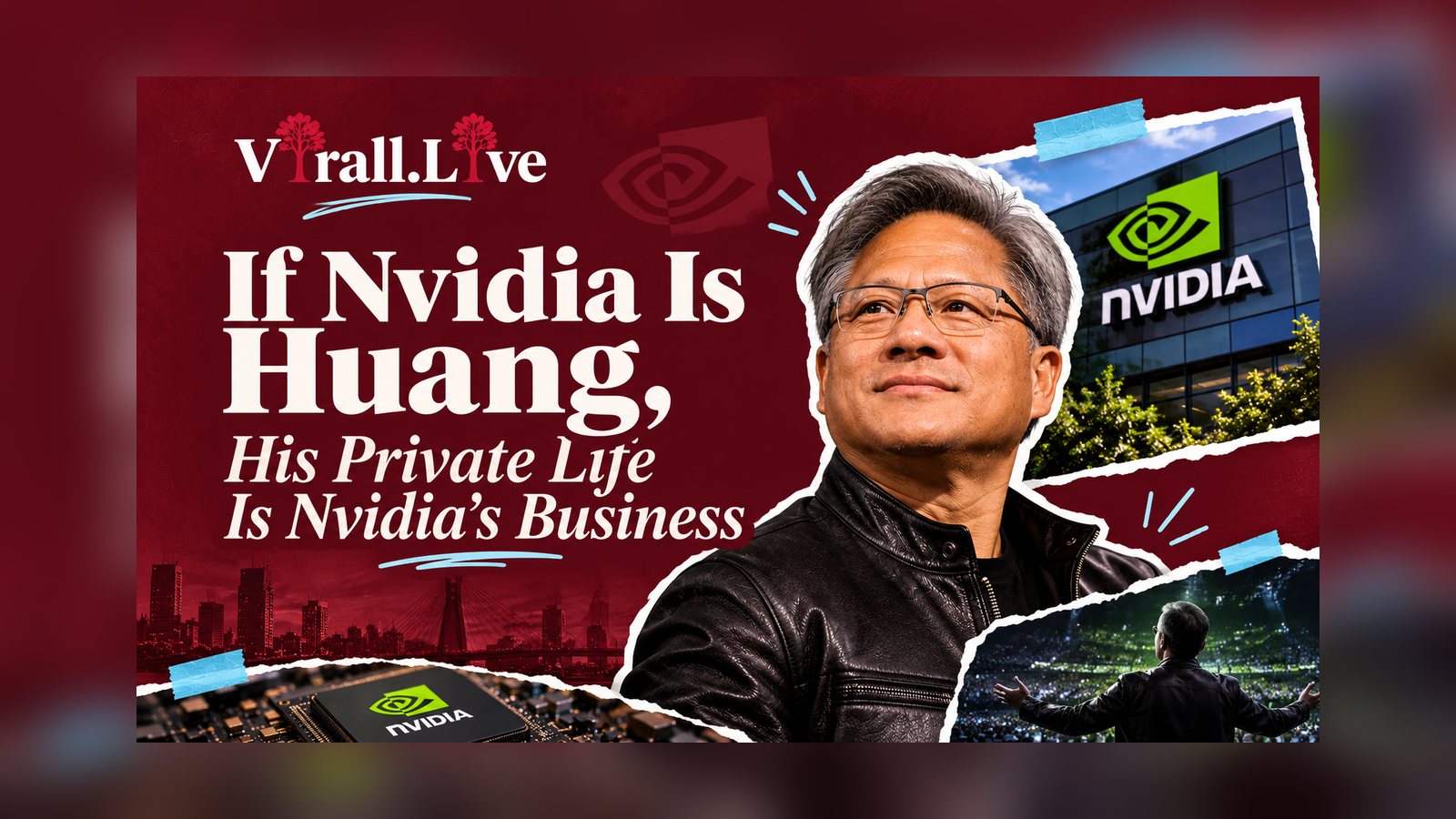
Everyone is asking whether Jensen Huang’s private life should cost him his job. The better question is what it says about a company worth trillions that nobody can imagine without him.
Pull up a chair, because the comment section has been busy. Everyone has an opinion on Jensen Huang stepping down from Nvidia, but two comments stopped me mid-scroll.
One says Jensen’s personal life has nothing to do with his work. The other says he is Nvidia, so how will the company survive without him?
Let’s talk, because I think those two comments are secretly the same argument, and it is not the one people expect.
For anyone catching up, Nvidia’s board announced on 12 November that Huang has resigned as president, CEO and board member, effective immediately, according to the company’s filing with the SEC.
The Oldest Plot in the Book
First, my confession: when the news broke, I shrugged. None of it was personal to me. But Huang had been a fixture on my timeline for years, mostly for the good he was doing, and my verdict never changed: that’s a good guy. So when the twist came, it landed.
There is nothing new under the sun, yet it never stops being jarring to watch someone at that height turn out to have shenanigans of his own.
Admitted, Reported, Alleged
The first revelation barely made me blink, and it was one he confirmed himself: in an email to staff, he admitted to cheating on his wife. The second made me sit up straight. The New York Times reported an affair with an Nvidia executive who reported to him, a claim that, at the time of reporting, Nvidia and Huang had not confirmed. I caught myself wondering what else was waiting to surface, and whether any of it touched the company itself.
Then came the third, a claim that US intelligence officials concluded the woman at the centre of the first affair was gathering information for Beijing, and I honestly don’t know what to believe. It remains unconfirmed, China’s foreign ministry calls it baseless, and until someone proves it, it stays a claim, not a fact.
The Marriage Behind the Valuation
Amongst the many reports on this story, one from the BBC stopped me in my tracks. It closed by reminding readers that behind the valuations sits a marriage of 41 years, and that line has stayed with me since. It points at exactly what the defenders keep missing.
Take the first comment, the one saying Jensen’s personal life has nothing to do with his work. I agree, up to a point. Plenty of people do what he did and never make a headline or at worst, resign. Intel’s Brian Krzanich resigned in 2018 over a relationship with an employee, and McDonald’s removed Steve Easterbrook in 2019 for breaking company policy on relationships with employees, as the Times noted in its report. The only difference is when the truth surfaces. But when you stand where he stood, held up by others as proof of what is possible, you stop being just anybody. People look up to you, and they copy you. A good name is better than silver and gold, as the old saying goes, and for a founder, that name is the foundation the company stands on. However disciplined you look, everyone has an Achilles heel, and for anyone still climbing, self-discipline is what stops it from cutting you short.
If the Man Is the Company
Now to the second comment. If Nvidia is Huang, then Huang’s private choices are Nvidia’s business. You cannot insist the company and the man are one and the same, then claim his conduct has nothing to do with the company. Pick one. The market seems to have picked: the share price dropped sharply after the Times reported the second affair. Axios noted the company had lost about $1 trillion in market value since the Times first reported, on 29 October, on Huang’s close relationship with a suspected spy.
Genius Is Not a Succession Plan
To be fair, plenty of great companies grew around one founder, and Huang knocked it out of the park. Under him, Nvidia made an early, big bet on AI and grew from about $400 billion in value to over $4 trillion. Nobody is calling him a bad CEO.
The trouble starts when no one has planned for the day the founder walks away. That exposure has a name, key person risk, and it applies when a company’s value rests heavily on one individual. Analysts call succession a blind spot, and when he spoke in mid-October about who comes next, his answer was vague. If you were waiting for a detailed plan, don’t hold your breath. Nvidia has since named CFO Colette Kress as interim CEO, and the board says it will consider internal and external candidates for a permanent replacement.
In as many words
If we are going by the metric that all’s well that ends well, this story has not ended well, and I’m not sorry for saying so. Nvidia can recover, and it may. But the lesson belongs to everyone who is climbing: the higher you go, the less your private life belongs to you alone. Self-discipline is not a bonus on the way up. It is what keeps you there.
Sources
NVIDIA Announces CEO Transition, Form 8-K exhibit, U.S. Securities and Exchange Commission, 12 November 2026
US chipmaker Nvidia investigates CEO Jensen Huang over affair, Al Jazeera, 8 November 2026
Nvidia investigates whether CEO Jensen Huang was targeted by Chinese spy with whom he had an affair, Associated Press via WDBJ7, 9 November 2026
Claims AI trailblazer Jensen Huang had affair with Nvidia executive, The New York Times via The Nightly, 11 November 2026
Nvidia CEO Jensen Huang Accused of Second Affair With Female Executive Working Under Him, IBTimes UK
China dismisses as a smear campaign claims of a spy plot involving Nvidia CEO, Associated Press via Anchorage Daily News, 9 November 2026
Nvidia sinks after report implicates CEO Jensen Huang in 2nd affair, Axios, 11 November 2026
Nvidia’s power is built around Jensen Huang, and the scandal is testing the formula, Fortune, 9 November 2026
Nvidia CEO affair sparks spy probe, with no successor in sight, HCA Magazine
Key Person Risk, Open Risk Manual
- #jensen huang
- #nvidia
- #nvidia ceo steps down
- #ai news
- #tech news
- #leadership accountability
- #succession planning
- #key person risk
Discussion
Log in to join the discussion.
- Loading comments…