
Next time someone tells you just to install solar, ask them this: which solar? From a ₦25,000 bulb kit to a ₦3.9 million house system, here is what each one really runs, who it is for, and what to ask before you pay.
Next time someone tells you to " just install solar", ask them this: which solar, and with what money?
It is the easiest advice in Nigeria to give and the hardest to follow. Light is short, generator fuel is eating your salary, and somebody always has a cousin who "went solar." But there is no single thing called solar. There is a ₦25,000 kit that runs three bulbs, and there is a ₦20 million system that runs a whole building. The advice only makes sense once you know which one the person means.
Getting into the Solar Jargons
You do not need to be technical to buy solar, but you need to know four words, because every quotation is full of them.
Watts (W) tell you how greedy an appliance is. A bulb sips a little. A fan eats more. An air conditioner gulps. When someone says a gadget is 100W, they mean it takes a medium bite of electricity.
kVA is the strength of the inverter, which is the box that turns stored electricity into something your sockets can use. Think of a danfo bus: kVA tells you how many passengers (appliances) it can carry at the same time. A 1kVA inverter can carry roughly 800 watts at once, which is a few bulbs, a couple of fans, a TV and a laptop. A 5kVA inverter carries about five times that.
kWh is the size of the battery's fuel tank. It tells you how long the inverter can keep going once the sun is gone. Think of it like the tank in your generator: a bigger tank runs longer.
Panels are what refill the tank during the day. More panels mean a faster refill, and a better chance of a full tank before night.
Put together: the inverter is the bus, the battery is the fuel tank, and the panels are the fuel pump. You can have a strong bus with a tiny tank, which is why some expensive-looking systems die at midnight.
The Solar quotation that started the conversation
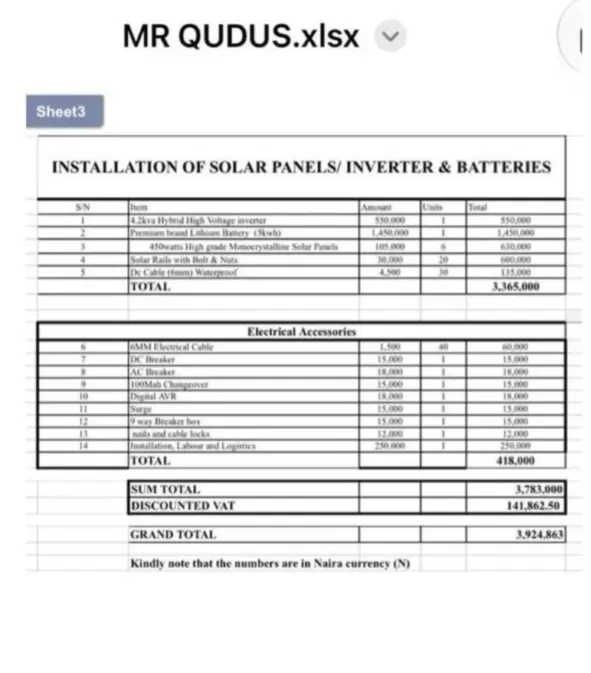
Qudus Akanbi Eleyi (@EleyiLagos) shared his solar quotation online after people told him to go and buy solar. He said he had already paid, and that installation would be done before the end of the month. His point was bigger than the price. Being able to afford solar does not mean every Nigerian youth can, and Nigerians cannot keep being told to buy their way out of a national electricity problem.
Item | Amount |
4.2kVA hybrid inverter (the bus) | ₦550,000 |
5kWh lithium battery (the fuel tank) | ₦1,450,000 |
6 solar panels (the fuel pump) | ₦630,000 |
Rails for the panels | ₦600,000 |
Cables | ₦135,000 |
Breakers, surge protection and other accessories | ₦168,000 |
Installation, labour and logistics | ₦250,000 |
VAT (discounted) | ₦141,862.50 |
Grand total | ₦3,924,863 |
This is from a screenshot of his post shared on social media. One installer's price on one day is not a market average, but it shows what a good house system costs.
Look at where the money goes. The battery alone is more than a third of the bill. The panels, the part everybody pictures when they say solar, are only about 16 percent.
The solar ladder: who each one is really for
Here is the part nobody explains. Solar comes in six levels, and each one serves a very different person. Prices below come from published reports and online sellers, and they differ from seller to seller, so treat every figure as a range, not a promise.
Level 1: The bulb and phone kit (about ₦15,000 to ₦90,000)
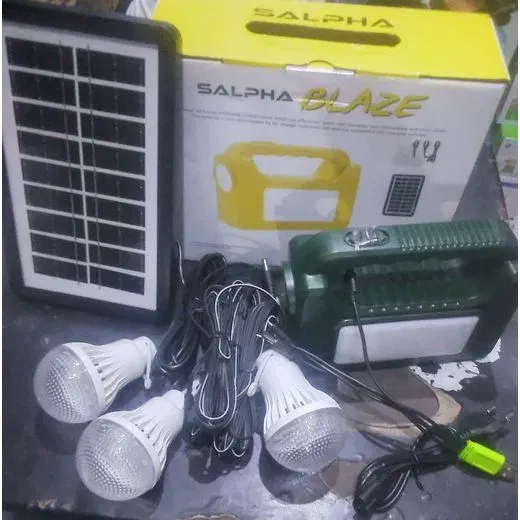
Image: Salpha Blaze solar kit. Credit: Salpha.
This is a small panel with a few bulbs and a phone charger, and some come with a small fan. Examples on Jumia include a rechargeable kit with three bulbs and a USB charger at ₦25,000, and a 5-in-1 kit with a table fan and two bulbs at ₦68,000. Another listing offers an 8W panel with a 12V fan, 3 LED bulbs and a USB charger at ₦88,660.
Who it is for: the tuck shop owner, the market trader, the student in a rented room, anyone who needs light and phone charging and nothing more.
What it carries: lights, phone charging and sometimes a small fan.
What it cannot do: run a TV, a laptop for long hours or a fridge. The smallest panels on the market are made for phone charging and small bulbs, not for running a household.
Level 2: The portable power station kit (about ₦150,000 to ₦300,000)
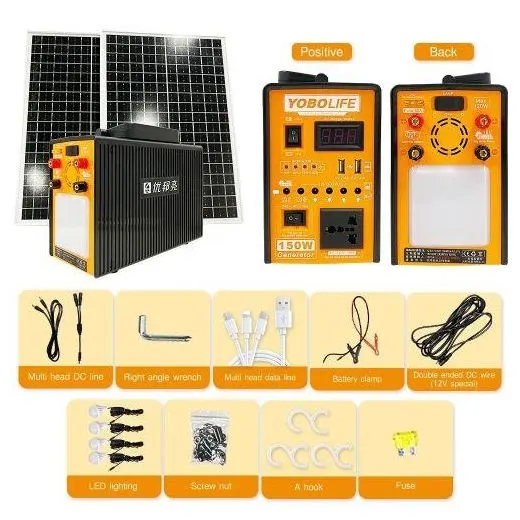
Image: Yobolife 150W portable solar kit. Credit: Yobolife.
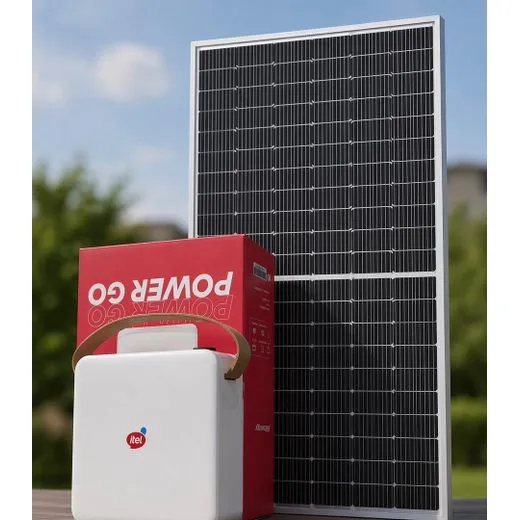
Image: itel PowerGo solar energy kit. Credit: itel.
This is a battery box with sockets and a panel to refill it. One example is the Itel PowerGo Solar Energy Kit, a portable power station with a solar panel, listed online at ₦250,000 to ₦300,000. Compact kits like the Yobolife 150W are in the same family. Check the battery size on the box before you buy, because that is what decides how long it runs.
Who it is for: the small shop that charges phones for customers, a one-room tenant, a barber with clippers and a light, someone who needs a quiet backup.
What it carries: lights, a fan, a TV for a few hours and gadget charging.
What it cannot do: run a fridge all night or any air conditioner.
Level 3: The starter system (₦850,000 to ₦1.2 million)
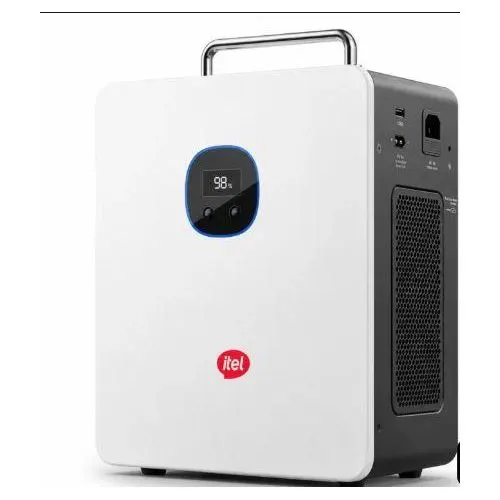
Image: itel power unit. Credit: itel.
This is the first real home system. A BusinessDay report says an entry-level system of 1 to 2 kVA is suitable for lights, fans, televisions and laptop charging, at ₦850,000 to ₦1.2 million installed.
Who it is for: a bedsitter, a one-bedroom flat, a small shop, a home office.
What it carries: lights, fans, TV, router and laptop, mostly through the night.
What it cannot do: air conditioner, pressing iron, heavy fridge and freezer use.
Level 4: The small home system (about ₦1.9 million to ₦2.3 million)
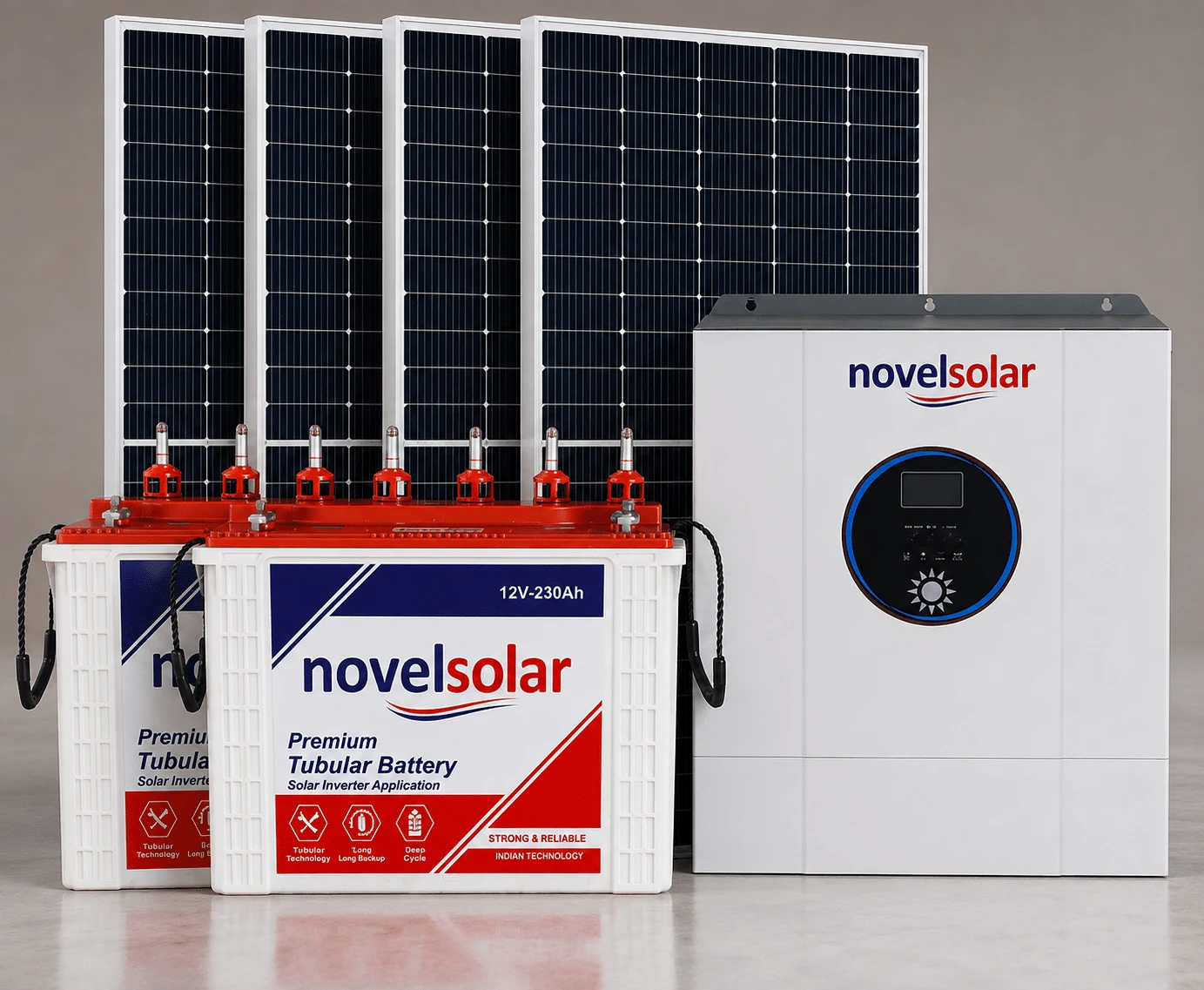
Image: Novel Solar panels, tubular batteries and inverter. Credit: Novel Solar.
A Techpoint price guide lists a 2.5kVA solar system at ₦1,940,000. Systems at this level often use tubular batteries, as in the picture, which usually cost less than lithium but are heavier and tend to wear out sooner.
Who it is for: a two or three bedroom flat and a family that wants the fridge on.
What it carries: everything in the starter system plus a fridge, and a small pump for short periods.
What it cannot do: air conditioner.
Level 5: The mid-size house system (about ₦3.75 million to ₦4.5 million)
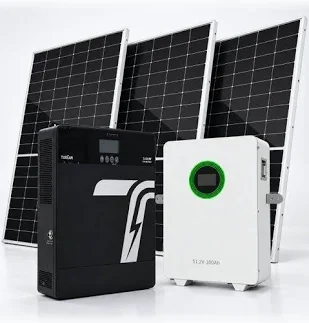
Image: mid-size home solar system with inverter and lithium battery. Credit: product image, source to be confirmed.
This is the level of the quotation above. Reports put 3 to 5kVA home systems at ₦2 million to ₦4.5 million. One Nigerian who installed a 5kVA inverter with a 5kWh battery and eight 590W panels said it cost about ₦3.75 million, and commenters argued it should have been cheaper, which shows how much prices vary.
Who it is for: a family house, a couple working from home, someone who wants most of the home on solar.
What it carries: lights, fans, TV, fridge, freezer, laptops, and one inverter air conditioner for part of the night.
What it cannot do: several air conditioners at the same time.
Level 6: The large system (about ₦6 million to ₦20 million)
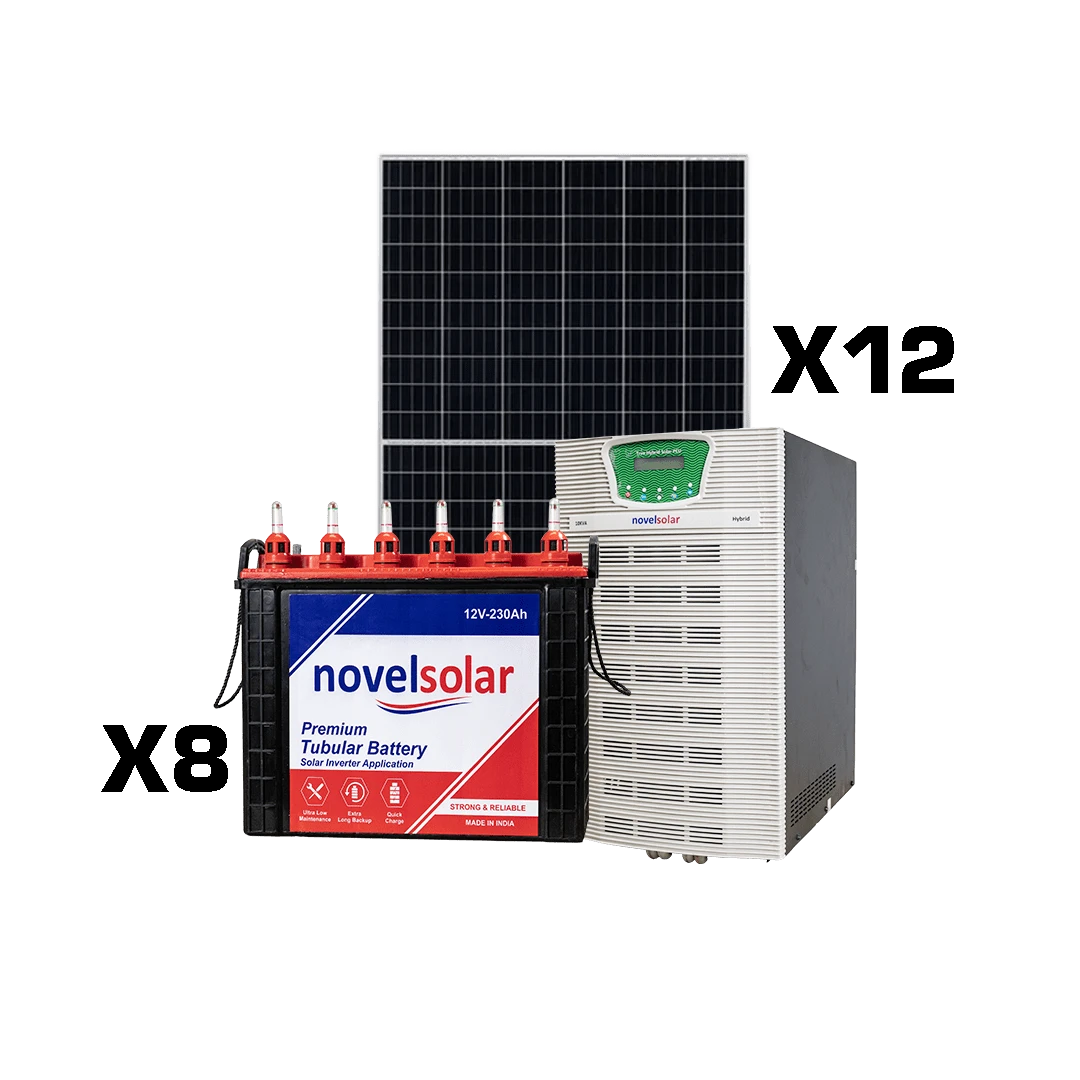
Image: Novel Solar 10kVA hybrid inverter, 12 panels and 8 batteries. Credit: Novel Solar.
TechCabal puts a 10kVA hybrid system at ₦10 million to ₦20 million in its 2025 guide, and installers' lists show lower figures for smaller builds. A system like the one pictured uses a dozen panels and eight batteries.
Who it is for: big houses with several ACs, offices, clinics and small businesses.
What it carries: nearly everything, including a water pump.
The standard and the reality
The standard solar system is a quality inverter, proper panels, a good battery and a professional installer with a warranty. That is Level 4 and up, and it is what people picture when they say "go and buy solar." Even the installation can cost a lot: professional installation alone runs ₦150,000 to ₦800,000.
The reality is that most Nigerians live in Levels 1 to 3. They buy what they can afford, a bit at a time, and they are not wrong to. The mistake is not buying a small system. The mistake is expecting a ₦25,000 kit to behave like a ₦3.9 million one.
What the big systems can actually carry
Take the quotation's system: a 5kWh battery and six panels. A normal night, five bulbs, two fans, a TV, a router, a fridge and a laptop, is a medium load, and the battery can run it for roughly 10 hours. Add one air conditioner, which is a heavy eater, and the same battery lasts about 4 hours. That is why someone with a ₦4 million system still switches off the AC at 2am.
The panels matter too. In good Lagos sun, six of them can refill the tank for most of a day, but on a rainy or hazy day they give much less. Solar is generous when the sun is, and honest when it is not.
Appliance | How greedy it is |
Bulb, router, phone charger, laptop | Small eater |
Fan, TV, fridge | Medium eater |
Air conditioner, pumping machine | Heavy eater |
Pressing iron, microwave, electric cooker | Very heavy eater (avoid on small systems) |
The runtime and sun figures are our own estimates. Real use varies.
Why it costs more than it did
A standard setup that used to cost between ₦800,000 and ₦1.3 million is now reported at ₦1.8 million to ₦4 million, and one report put the rise in installation costs at 208 percent. Industry players blame high demand, the weaker naira, import duties and transport costs.
Why this is not a small money thing
At the ₦70,000 national minimum wage set in 2024, ₦3.9 million is about 56 months of salary with nothing else spent. Even for people on far better pay, it is a big decision.
To check if it makes sense, add up what you spend on fuel and generator repairs in a year, then divide the system price by that figure. If you spend ₦150,000 a month, a ₦3.9 million system pays back in about 26 months, before maintenance or a battery replacement. If you spend ₦20,000 a month, a smaller system is the smarter move.
What Lagos says about solar now
In April 2026, a viral video showed Lagos State Housing Ministry officials confronting a resident over solar panels at a state-owned estate. The state then clarified that fees and permits apply to occupants of government-owned housing estates, while most residents in private properties do not need a government permit for domestic use. The reasons given were structural safety, insurance and fair use of shared roof space. Some residents fear the rule could widen later, and analysts say safety rules must stay transparent and affordable.
In practice:
State government estate: get written approval before drilling anything.
Your own private home: the state says no government permit is needed for domestic solar right now.
Renting: get your landlord's consent in writing.
Selling power back to the DisCo: possible under the new 2026 net billing rules, but one report says it takes a system of around 50kWp, far bigger than a home needs.
Rules change. Confirm with the Ministry of Housing, your DisCo or a licensed installer.
If your goal is just charging gadgets
Ask what the end goal is. If it is phones, a laptop and a few lights, you do not need a ₦3.9 million system. A fast-charging power bank starts from around ₦13,500, and a Level 1 or 2 kit covers light and charging for far less than a home system. Our guide to power banks that refill before NEPA takes light again shows what to look for: https://www.virall.live/news/7-fast-charging-power-banks-that-refill-your-phone-before-nepa-takes-light-again
Five questions to ask before you pay a kobo
What exactly do I want to run?
For how many hours at night?
Do I have the right to install it? (estate rules, landlord, roof)
Can I pay in full, and what is the total on a payment plan?
Who installs it, and what is the warranty? Get at least three written quotes.
Final word
Whatever side of the electricity debate you stand on, the bill lands on you either way. So the next time someone tells you to just install solar, ask them which solar, running what, for how many hours, and who is paying.
For more plain-language gadget and power breakdowns, visit Virall.live: https://www.virall.live/
Prices may differ based on sellers, location and the date you shop. This post is not sponsored. It is based on what is being sold online, published price reports, a publicly shared installer quotation and government statements. Get several written quotes before you buy. This is general information, not financial advice.
Image credits
Salpha Blaze solar kit: Salpha
Yobolife 150W portable solar kit: Yobolife
itel PowerGo solar energy kit and itel power unit: itel
Novel Solar panels, batteries and inverters (Level 4 and Level 6): Novel Solar
Level 5 mid-size system image: product image, source to be confirmed before publishing
Product images belong to their respective brands and sellers and are shown for illustration. Confirm permission to reuse, or link to the seller's page, before publishing.
Sources to link in the article
Quotation: screenshot of an Instagram post by @onlyinnigeria showing a post by @EleyiLagos (verify against his original post on X before publishing).
Small kit and starter kit prices: Jumia listings for rechargeable solar kits and the Itel PowerGo kit (https://jumia.com.ng/slp/solar-power-starter-kit and https://jumia.com.ng/slp/solar-adaptation-kits). Small panels for phone charging and bulbs: Pulse (https://www.pulse.ng/story/cheap-solar-nigerians-can-afford-2026032318334705883).
Entry-level price: BusinessDay, "What it costs to install solar in Nigeria today" (https://businessday.ng/news/article/what-it-costs-to-install-solar-in-nigeria-today/). Installation cost range: BusinessDay (https://stg18326.businessday.ng/?p=1087961).
Price rise: Leadership (https://leadership.ng/price-of-solar-power-escalates-as-electricity-crisis-persists/) and allAfrica (https://allafrica.com/stories/202604070032.html).
Price ranges: Techpoint (https://techpoint.africa/?p=324693), Energy Worth Online (https://energyworthonline.com.ng/solar-installation-cost-in-nigeria-2026-prices-top-providers-and-how-to-get-quality-on-a-budget), TechCabal (https://techcabal.com/2025/02/18/the-cost-of-going-off-grid/) and Legit.ng (https://www.legit.ng/people/1706701-woman-buys-5kva-solar-inverter-lithium-batteries-displays-total-cost-people-complain/).
Lagos rule: Pulse (https://www.pulse.ng/story/do-you-need-a-permit-to-install-solar-panels-in-lagos-heres-what-the-government-says-2026042311022610292), Premium Times (https://www.premiumtimesng.com/news/top-news/874024-lagos-confirms-solar-permit-fees-in-viral-video-makes-clarifications.html), Techeconomy (https://techeconomy.ng/did-lagos-order-all-solar-users-to-obtain-permit-heres-what-government-clarified/) and The Sun (https://thesun.ng/residents-to-lasg-scrap-solar-tax-dont-punish-us-for-escaping-darkness/).
Net billing: Daily Trust (https://dailytrust.com/consumers-need-200-solar-panels-to-sell-electricity-to-discos/).
- #solar nigeria
- #solar installation cost
- #inverter
- #power supply nigeria
- #lagos solar permit
- #nepa
- #5kva
- #solar kit
Discussion
Log in to join the discussion.
- Loading comments…